Accredited institute of Ayurvedic medicine & hospital care

Classical Ayurveda,
practised at
hospital scale.

Ayush Shubham Institute of Medical Sciences is an accredited Ayurvedic medical institute and hospital. Our clinical teams treat chronic spine, joint, metabolic and digestive conditions with integrated diagnosis, prescribed Panchakarma and long-term follow-up, in in-patient and day-care settings.

Spine and joint rehabilitation
Metabolic health
Chronic digestive care
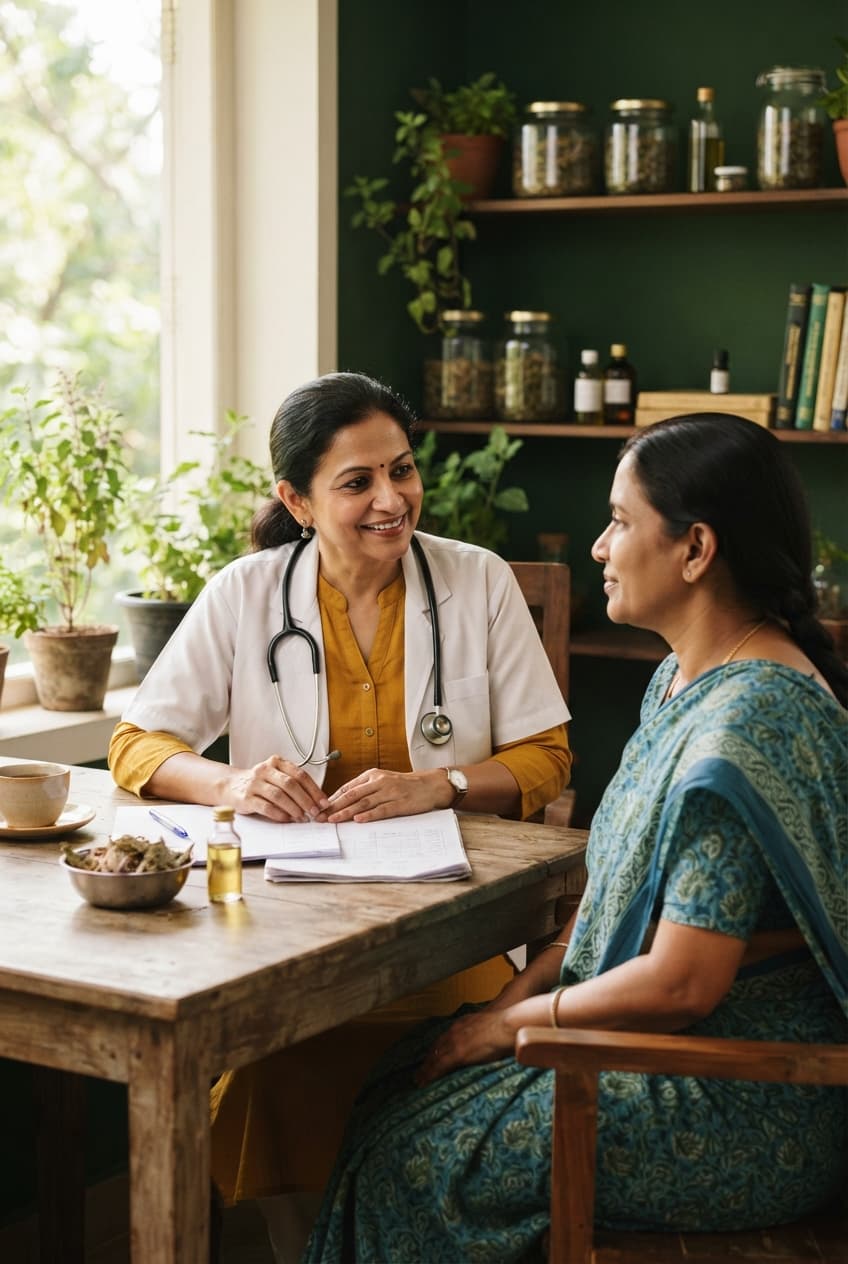
Doctor and woman in a blue-green sari converse at a wooden table in a warmly lit herbal consultation room.
Statutory standing

Accredited, regulated and accountable

The institute operates inside India's statutory Ayurvedic medical framework, and its academic and hospital functions are externally verifiable rather than self-declared.

Recognised medical education

Ayurvedic medical education delivered under India's national AYUSH framework, with clinical training attached to the hospital.

Hospital-based clinical training

Resident physicians and faculty treat patients in the same hospital where they teach, under supervision rather than in isolation.

Documented clinical protocols

Emergency, in-patient and therapy services run against written protocols, with daily physician review of every admitted patient.

Public healthcare welfare

Outreach, health camps and community care sit inside the institute's public health mandate, alongside teaching and hospital work.

Medical staff discuss care with an older patient seated in a hospital bed in a bright ward.
The institute

A teaching hospital, not a stand-alone clinic.

Medical education, clinical practice and public healthcare welfare run on the same campus. Patients are treated by faculty and resident physicians working together, and every therapy we use is taught, practised and reviewed in-house.

  • Postgraduate Ayurvedic medical education taught against live clinical cases.

  • In-patient wards, therapy rooms and an in-house dispensary on one campus.

  • Public health welfare work, including outreach and community care beyond the wards.

Clinical specialities

Specialised programmes for chronic conditions

Each speciality is a defined clinical programme with its own assessment, therapy protocol and follow-up schedule, rather than a single consultation.

Therapist pours oil onto a client’s back during a massage in a rustic treatment room.

Spine & Joint Rehabilitation

Degenerative spine conditions, disc pathology, sciatica, arthritis and post-surgical recovery, treated with classical therapies alongside supervised physiotherapy and movement retraining.

Doctor measures a seated man's blood pressure in a warmly lit medical office.

Metabolic Health

Long-term management of diabetes, obesity, thyroid dysfunction and dyslipidaemia, run as a structured programme of internal medication, diet, daily-rhythm correction and periodic clinical monitoring.

Person in a green shirt weighs tan herbal powder on a brass balance scale among jars in an apothecary.

Chronic Digestive Care

Persistent and recurring gastrointestinal conditions, including IBS, chronic acid disorders, malabsorption and liver-related care, managed for the long term rather than relieved for a season.

Care pathway

What happens, from first consultation to follow-up

Every patient follows the same four stages. Assessment comes before anything is prescribed, and the plan is explained with its course and cost before treatment begins.

01

Clinical consultation and assessment

A physician takes a full history, reviews the medication you already take and examines you. The first consultation is diagnostic: nothing is prescribed until it is complete.

02

Integrated diagnosis

Blood work, imaging and physiotherapy assessment where each is relevant, read alongside the Ayurvedic assessment of constitution and pathology. Reports you bring from elsewhere are used, not repeated.

03

Panchakarma and internal medicine

Therapy is delivered in supervised cycles, as an in-patient or as day-care where the protocol allows, with the treating physician reviewing progress daily.

04

Diet, daily rhythm and follow-up

A regimen for diet, sleep and daily routine is set before discharge, with scheduled reviews to hold the result once the therapy cycle ends.

Emergency & referrals

Reachable at any hour, and open to referring clinicians

Emergency and in-patient services operate 24x7. Patients arrive directly or through partner hospitals and referring physicians, and the same clinical team follows the case through admission, treatment and follow-up.

24x7 emergency & ambulance

Casualty and emergency admissions run every day of the year, with ambulance routing and physician assessment on arrival. Walk-in emergencies are accepted at any hour, without a prior appointment.

Hospital & physician referrals

Referring hospitals and physicians can send patients for Ayurvedic assessment or co-management. The clinical team takes the case and returns an assessment note and treatment plan to the referring clinician.

Patient questions

The questions patients ask before they commit

If your question is not here, the department that would treat you can answer it before you book.

Chronic conditions are what this institute is set up to treat, and many patients arrive after years of management elsewhere. What Ayurvedic treatment generally offers is control of the condition and a progressive reduction in symptoms, not a rapid cure. Whether it is appropriate in your case can only be answered after assessment, and if it is not appropriate the physician will tell you so.

Usually yes. The treating physician reviews every prescription at the first consultation and coordinates the Ayurvedic plan with it. Nothing is stopped or altered without the physician's decision, and you should not stop anything on your own in the meantime.

It depends on the protocol. Some therapies are delivered as day-care, with you going home the same day; others need an in-patient cycle because they must be supervised and repeated daily. The assessment determines which applies, and you will know before treatment starts.

Chronic conditions are managed over months rather than in one course. Your physician sets an initial course at assessment, reviews progress at fixed intervals and adjusts the plan from there. You will be told what the first stage involves before you begin it.

Fees depend on the protocol, whether treatment is in-patient or day-care, and how long the therapy cycle runs. A written estimate is given after assessment and before treatment starts, so the commitment is never open-ended.

Yes. Referring hospitals and physicians can send patients for Ayurvedic assessment or for co-management alongside ongoing treatment. The clinical team takes the case, assesses it and returns an assessment note and treatment plan to the referring clinician.

Institute records

Verify a certificate issued by the institute

Employers, universities and statutory bodies can confirm a medical or academic certificate issued by the institute. Enter the reference number printed on the document and the records office will return confirmation.

Book a consultation with the right department

Tell us who the patient is and which condition this is for. The department that treats it reviews the request and calls to confirm a time.

  • Requests are read by the department that treats your condition, not a general desk.

  • Emergency and in-patient services run 24x7, including public holidays.

  • Bring existing prescriptions and recent investigation reports to the first consultation.

We use these details only to arrange this appointment.